Flooding Risk and Your Waterloo Region Home: What Owners, Sellers, and Buyers Need to Know


Recent severe storms across Ontario have put flooding back in the headlines — and closer to home, a Waterloo couple's experience with repeated basement flooding and the uncertainty it's created around their home sale is a reminder that this isn't an abstract risk. It's a real one, and it affects real estate decisions on every side of a transaction.
Flooding is the most common and most costly natural disaster in Canada. Climate patterns are producing more intense rainfall events — the kind of storms that overwhelm aging municipal infrastructure and send water into basements that have never flooded before. And research from the University of Waterloo's Intact Centre on Climate Adaptation has put a number on the real estate impact: homes in areas affected by catastrophic flooding sell for an average of 8.2 per cent less, take nearly 20 per cent longer to sell, and see 44 per cent fewer listings — because owners in affected areas are reluctant to sell at reduced values.
Whether you own, sell, or buy in the Waterloo Region, understanding how flooding risk affects your property is no longer optional. Here's what you need to know.
For Homeowners: Reducing Your Risk Now
You don't need to wait for a storm to take action. Most basement flooding in the Waterloo Region is preventable — or at least reducible — through practical measures that protect your home and your investment.
Check your grading. The ground around your home should slope away from the foundation on all sides. Over time, settling, landscaping changes, and garden bed additions can redirect water toward the house rather than away from it. Walk your property after a heavy rain and watch where the water goes. If it's pooling against the foundation, regrading is one of the most effective and affordable flood-prevention measures available.
Inspect and maintain your sump pump. If your home has a sump pump, test it regularly — pour water into the pit and confirm the pump activates, runs, and discharges properly. Replace the battery backup if it has one. A sump pump that fails during a storm is worse than not having one at all, because you've assumed a level of protection that isn't there.
Consider a backwater valve. A backwater valve prevents sewage from backing up into your basement through the municipal sewer system during heavy rainfall. The Region of Waterloo and individual municipalities offer subsidy programmes to help homeowners install backwater valves — check with your local municipality for current programme details and eligibility.
Disconnect downspouts from the storm sewer. If your downspouts are connected directly to the municipal storm sewer system, they're contributing to the system overload that causes backups during intense storms. Disconnecting them and directing the water onto your lawn (away from the foundation) reduces the burden on the system and keeps the water out of your basement.
Maintain your window wells. Basement window wells without proper covers or drainage can collect rainwater and channel it directly into your basement. Clear covers and functioning drains are inexpensive insurance against a common flooding entry point.
Review your insurance coverage. Not all home insurance policies cover overland water flooding. Sewer backup coverage is typically a separate add-on. Review your policy now — not after a storm — and understand exactly what's covered and what isn't. If your current coverage has gaps, talk to your broker about options. The cost of adding coverage is modest compared to the cost of an uninsured flood.
For Sellers: What Flooding History Means for Your Sale
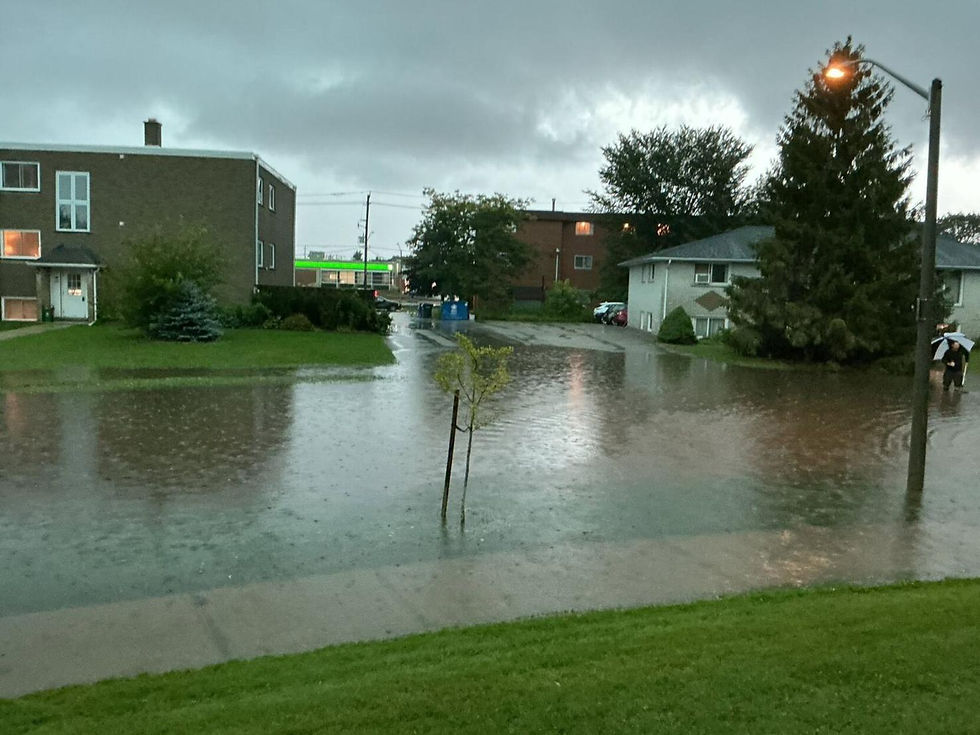
If your home has experienced flooding, you're facing a reality that directly affects your transaction. Understanding your obligations and your options helps you navigate it with confidence.
Ontario's disclosure obligations are clear. Under Ontario real estate law, sellers are required to disclose known material latent defects — problems that aren't visible and that a buyer couldn't reasonably discover through a standard inspection.
A history of basement flooding is a material latent defect. Failing to disclose it doesn't make the problem disappear — it creates legal liability that can follow you long after the sale closes.
Disclosure is in your interest. This feels counterintuitive, but honest disclosure actually protects you. A buyer who discovers undisclosed flooding history after closing has grounds for a legal claim. A buyer who knows the history upfront, sees the remediation you've done, and purchases with full information has accepted the risk — and your liability is significantly reduced.
Document your remediation. If you've taken steps to address flooding — installed a sump pump, added a backwater valve, regraded the property, waterproofed the foundation — document everything.
Receipts, permits, contractor reports, and before-and-after photos demonstrate that you've taken the problem seriously and invested in solutions. This documentation turns a disclosure from a negative into a demonstration of responsible homeownership.
Pricing should reflect reality. If your home has a flooding history, your pricing strategy needs to account for it honestly. Your agent should be advising you on how the market typically responds to disclosed flooding history in your specific neighbourhood and price range. Overpricing a home with known flooding issues leads to extended days on market and eventual price reductions that can be more damaging than pricing realistically from the start.
Your agent should be managing the conversation. At Team Pinto, when we list a home with flooding history, we prepare the disclosure, position the remediation efforts, and manage buyer concerns proactively. The goal isn't to hide the history — it's to present it in the context of what's been done to address it and how the home stands today.
For Buyers: Due Diligence That Protects You
Flooding risk is one of the most important things buyers should evaluate — and one of the most frequently overlooked. Here's how to protect yourself.
Ask the question directly. Has this home ever experienced water infiltration or flooding? The seller's responses on the Seller Property Information Statement (SPIS) — if one is provided — are a starting point, but your agent should also be asking the listing agent directly. Not every seller completes an SPIS, and not every answer on the form is complete.
Read the signs during showings. Water stains on basement walls or floors. Efflorescence (white mineral deposits) on concrete. A freshly painted basement that smells of new paint but has no other updates. Dehumidifiers running. A sump pump pit in the floor. Stains on the lower sections of drywall. These signs don't necessarily mean the home floods — but they mean you should be asking more questions.
Check the grading. Walk the property's perimeter during your showing. Does the ground slope toward the house or away from it? Are the downspouts directing water away from the foundation? Are the window wells covered and draining? Your agent should be checking these details with you at every showing.
Verify flood plain status. The Grand River Conservation Authority maintains flood plain mapping for the Waterloo Region. Properties within designated flood plains are subject to specific regulations, may have difficulty obtaining insurance, and carry risks that extend beyond basement water. Your agent should be verifying flood plain status for any property near a waterway — including the Grand River, the Speed River, Laurel Creek, and the many smaller creeks and tributaries that run through the region's neighbourhoods.
Get the right home inspection. A standard home inspection will note visible signs of water damage, but it won't assess the municipal infrastructure, test the sump pump under load, or evaluate the drainage system comprehensively. If you have concerns about a specific property, consider a supplementary assessment by a waterproofing specialist or a drainage engineer.
Understand the insurance implications. Before you finalise your purchase, confirm that you can obtain adequate home insurance — including overland water and sewer backup coverage — at a reasonable cost. Some properties with flooding histories or flood plain locations are difficult or expensive to insure. Discovering this after closing is a costly surprise that proper due diligence prevents.
The Climate Reality

Intense rainfall events are becoming more frequent across southern Ontario. Municipal infrastructure in many Waterloo Region communities was designed for rainfall patterns that no longer reflect reality. Older storm sewer systems, aging pipes, and increased impervious surfaces (driveways, patios, roofs) in established neighbourhoods all contribute to flooding risk that didn't exist when many homes were built.
This isn't a reason to avoid buying — it's a reason to buy with your eyes open. Understanding grading, drainage, sump pump condition, insurance coverage, and flood plain status is part of informed homeownership in a climate that's producing more water, more quickly, than the infrastructure was designed to handle.
How Team Pinto Approaches Flooding Risk

Flooding risk is part of our property evaluation — for both buyers and sellers. And this is an area where Team Pinto brings a perspective that most agents can't.
Before entering real estate, Aron owned and operated a successful restoration franchise in the Waterloo Region, dealing directly with water-damaged homes — the causes, the remediation, and the long-term consequences of water infiltration that isn't properly addressed. That hands-on experience with what water actually does to a home informs how we evaluate properties today.
For sellers, we help you understand your disclosure obligations, document remediation efforts, and position your home honestly in the market. For buyers, we help you understand how to check grading, identify water-related warning signs during showings, verify flood plain status, and ensure you're asking the right questions before you commit.

The goal isn't to create anxiety — it's to ensure you make informed decisions about one of the largest investments of your life. A home with well-managed water risk, proper systems in place, and honest documentation can be an excellent purchase. A home with undisclosed flooding history and no remediation is a problem waiting to surface.
Your agent should be helping you tell the difference.
Ready to buy or sell with confidence? Contact Team Pinto at 519-818-5445 or visit teampinto.com.
This article provides general information about flooding risk and real estate considerations and is not legal, insurance, or engineering advice. For specific questions about disclosure obligations, consult a qualified Ontario real estate lawyer. For insurance coverage questions, consult your insurance broker. For drainage and waterproofing assessments, consult qualified professionals. Municipal subsidy programmes for backwater valves vary — contact your local municipality for current details. Team Pinto serves buyers and sellers across Kitchener, Waterloo, Cambridge, and the surrounding communities of the Waterloo Region.