The ION Effect: How Light Rail Changed Real Estate in the Waterloo Region
- Team Pinto

- 16 hours ago
- 7 min read

When the ION light rail launched in June 2019, the debate was heated. Was it worth the cost? Would people actually ride it? Would it justify the years of construction disruption that had torn up King Street and tested the patience of businesses, commuters, and residents across the corridor?
Seven years later, the numbers have answered most of those questions.
Nearly $5 billion in new development along the central transit corridor. Close to 19,000 new residential units constructed since the project was approved. Municipal tax revenue from corridor properties up 110 per cent. Record ridership, with more than 19 million passengers carried. And a transformation of the urban landscape between Conestoga Mall and Fairway Road that has fundamentally changed how the Waterloo Region looks, feels, and functions.
For buyers and homeowners, the ION's impact goes well beyond transit convenience. It has reshaped property values, redirected development patterns, and created a new geography of desirability across the region. Understanding that geography — and how it affects the home you're buying or the one you already own — is one of the most valuable things you can do in this market.
What the ION Actually Changed

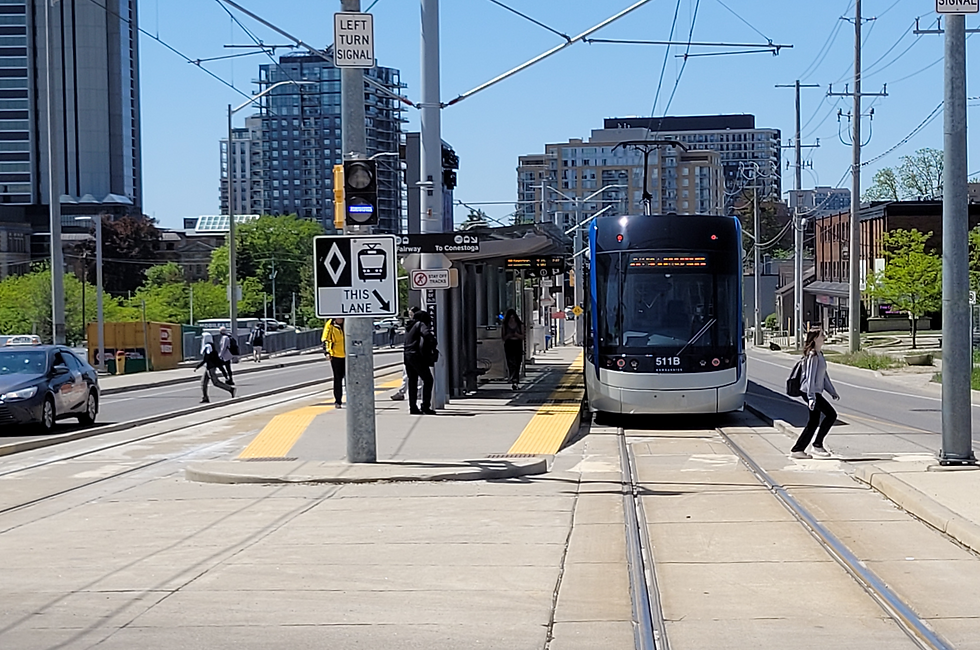
The ION runs 19 kilometres from Conestoga Mall in north Waterloo to Fairway station in south Kitchener, with 19 stations along the route. It passes through Uptown Waterloo, past both universities, through downtown Kitchener, and south to the Fairway Road commercial corridor.
But the ION's impact extends well beyond the people who ride it. The light rail did something that buses alone couldn't: it made a permanent, visible, infrastructure-level commitment to a specific corridor. Developers, investors, and buyers responded to that permanence.
Buses can be rerouted. A light rail line is steel in the ground. When the Waterloo Region committed to the ION, it told the market exactly where the future of urban investment would be concentrated — and the market listened.
The result has been a dramatic concentration of development along the corridor. High-rise residential towers, mixed-use buildings, and commercial investment have clustered around stations and along King Street in a pattern that simply didn't exist before the ION was approved. The skyline of downtown Kitchener and Uptown Waterloo has changed more in the last decade than in the previous fifty years.
The Property Value Effect
The relationship between transit and property values is well documented in cities around the world, and the Waterloo Region has followed the pattern.
Properties within walking distance of ION stations — generally within 500 to 800 metres — have seen stronger demand and value appreciation than comparable properties further from the corridor. This "transit premium" shows up in both the resale market and the rental market, where proximity to LRT stations commands higher rents from tenants who value the car-optional lifestyle the ION provides.
The effect isn't uniform. Station areas with strong surrounding amenities — walkable retail, restaurants, parks, employment — have seen the most dramatic impact. Stations in more suburban settings have benefited less, because transit value is amplified by the walkability of the surrounding neighbourhood.
For homeowners along the corridor, this has been a genuine wealth effect. Properties that were purchased before the ION launched — when the corridor was still defined by construction disruption rather than transit convenience — have seen value appreciation that outpaced the broader market.
For buyers today, the transit premium is largely priced in along Stage 1. You're no longer buying ahead of the curve on the existing line — you're buying into an established transit corridor at current market values. The opportunity for buying ahead of the curve now lies along the planned Stage 2 route to Cambridge.
Which Neighbourhoods Benefited Most
The ION's impact maps directly onto many of the residential neighbourhoods in the Wataerloo Region.
Fairview/Kingsdale is perhaps the most dramatic example. With two ION stations — Fairway (the southern terminus) and Block Line — this neighbourhood went from being a quiet, affordable area on the city's edge to one of the best transit-connected communities in Kitchener. The combination of accessible pricing and strong transit access has made it increasingly attractive to buyers who see the trajectory.
Uptown Waterloo was already desirable before the ION, but the light rail cemented its position as the region's most walkable urban neighbourhood. The ION runs directly through Uptown's commercial core, connecting it seamlessly to the universities and downtown Kitchener.
Downtown Kitchener has experienced the most visible physical transformation. The concentration of high-rise development around the central stations has changed the skyline and brought thousands of new residents into the urban core. For buyers interested in condo living with transit at the door, downtown Kitchener offers the most urban experience in the region.
Belmont Village and Victoria Hills benefit from their proximity to the corridor and the Iron Horse Trail, which provides a cycling and walking connection to the ION without being directly on the line. These neighbourhoods offer the transit-adjacent advantage without the density and traffic that come with being on King Street itself.
Colonial Acres and Lakeshore North benefit from their proximity to Conestoga Mall, the northern terminus — providing ION access via a short drive or connecting bus route without being in the urban corridor.
What the ION Didn't Change

The ION's impact has been significant, but it hasn't transformed every neighbourhood equally — and understanding where the effect fades is as important as knowing where it's strongest.
Neighbourhoods more than a kilometre from the corridor have seen less direct impact. Communities like Stanley Park, Forest Heights, Country Hills, Doon South, and the Cambridge neighbourhoods are largely unaffected by the Stage 1 ION in terms of daily transit utility. Their values are driven by their own fundamentals — schools, green space, housing quality, highway access — rather than proximity to the LRT.
Car-dependent neighbourhoods remain car-dependent. The ION improved transit for people who live and work along the corridor, but it didn't change the fundamental reality that most of the Waterloo Region is built around vehicle access. Neighbourhoods on the city's edges — Eastbridge, Vista Hills, Westvale, Chicopee, Hidden Valley — continue to function as car-oriented communities regardless of the ION's presence elsewhere.
The construction disruption was real and lasting for some businesses. Years of construction along King Street forced some businesses to close or relocate. The corridor has recovered and in many ways is stronger than before, but the disruption cost was not evenly distributed.
Stage 2: The Cambridge Opportunity
The Region has approved Stage 2 of the ION — a $1.36 billion extension that will add 17 kilometres and seven new stations, running from Fairway station south through Preston and into downtown Cambridge.
The timeline for construction has not been finalised, and buyers should not purchase based on an assumed completion date. But the approval itself is significant — it tells the market that the same permanent infrastructure commitment that transformed the Kitchener-Waterloo corridor is coming to Cambridge.
For buyers looking at Cambridge, Stage 2 creates a genuine consideration.
Preston is directly on the planned route, and our guide noted the ION extension as a factor that forward-thinking buyers should have on their radar. Properties purchased in Preston today — at current Cambridge pricing, which is generally lower than equivalent Kitchener-Waterloo pricing — could benefit from the same transit premium effect that Stage 1 properties experienced.
Galt and Hespeler, while not directly on the Stage 2 route, would benefit from improved transit connectivity to the rest of the region through connecting services.
The honest caveat: transit premiums take years to materialise fully, construction timelines are uncertain, and buying purely on speculation is risky. The strongest approach is to buy in a neighbourhood that works for you today — and treat the future transit connection as a bonus rather than the primary reason for purchase.
What Buyers Should Understand
The ION has created a new set of considerations for buyers in the Waterloo Region.
Proximity to the ION is a genuine amenity — but it's not for everyone. If you commute along the corridor, use transit regularly, or value the walkable urban lifestyle that the ION supports, living near a station adds real daily value. If you drive everywhere and prefer suburban quiet, paying the transit premium doesn't make sense for your lifestyle.
The corridor is urban and getting more urban. The concentration of development along King Street means more density, more traffic, more construction, and a faster pace of change than the surrounding residential neighbourhoods. Buying along the corridor means buying into that urban energy — for better and for worse.
Transit-adjacent can be better than transit-direct. Some of the best value in the current market is in neighbourhoods that are close to the ION but not on King Street itself. These areas offer transit access via a short walk, bike ride, or connecting bus route — without the noise, density, and traffic of being directly on the line.
Stage 2 is an opportunity, not a certainty. The extension to Cambridge is approved but not built. Buy for today's value, not tomorrow's speculation.
How Team Pinto Thinks About Transit

When we evaluate properties and advise buyers, the ION is part of our assessment — but it's one factor among many.
For some buyers, proximity to the ION is one of the most important features on their list. For others, it's irrelevant. What matters is understanding how transit access — or the lack of it — affects the specific property you're considering, the lifestyle you want to live, and the long-term value trajectory of your investment.

At Team Pinto, we help buyers understand the ION's impact at the neighbourhood and street level. We know which areas benefit most from transit proximity, where the premium is justified, and where your money is better spent on other features. And for buyers looking at Cambridge ahead of Stage 2, we provide the honest context that helps you make a decision based on today's reality rather than tomorrow's hopes.
Ready to find a home that fits how you actually live? Contact Team Pinto at 519-818-5445 or visit teampinto.com.
Transit and development information reflects publicly available data from the Waterloo Region, Grand River Transit, and published research. The ION Stage 2 extension is approved but construction timelines are subject to change. Property values are influenced by many factors beyond transit proximity. For specific advice about how the ION affects properties you're considering, contact Team Pinto. Team Pinto serves buyers and sellers across Kitchener, Waterloo, Cambridge, and the surrounding communities of the Waterloo Region.


