The Low-Maintenance Garden That Adds Value to Your Waterloo Region Home


Here's a truth that experienced gardeners and real estate agents both know: the gardens that impress buyers most aren't the ones that require the most work. They're the ones that look intentional, structured, and beautiful in every season — while quietly demanding very little from the person who owns them.
If you've ever driven through a Waterloo Region neighbourhood in late February and noticed that one yard that still looks good — the one with the textured bark, the ornamental grasses catching the light, the evergreen structure holding the composition together while everything else is grey and dormant — you've seen a four-season garden. And you've probably also noticed that the homes with these gardens tend to look more cared for, more established, and more valuable than the ones surrounded by lawn and a couple of overgrown yews.
That's not a coincidence. Well-designed landscaping can influence perceived home value by 10 to 20 per cent according to real estate industry research. But the key phrase is "well-designed" — not "high-maintenance." The gardens that boost value are the ones a buyer can look at and think "I can maintain this" rather than "I'll need to hire someone immediately."
Whether you're planting for your own enjoyment, preparing a Waterloo Region home for sale, or simply tired of spending every weekend on garden maintenance, here's how to build a garden that works hard while you don't.
The Four-Season Principle
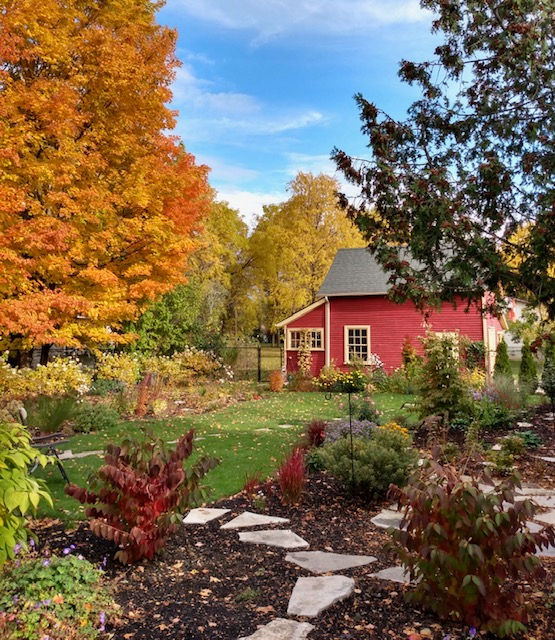
The single most important concept in low-maintenance garden design is four-season interest — creating a garden that has something visually compelling to offer in every month of the year, not just July.
Most gardens are designed for summer. Annuals go in after the last frost, everything looks spectacular for twelve weeks, the first hard frost arrives, and suddenly you're looking at bare soil and dead stems until May. That's six months of visual nothing — and in Waterloo Region, where winter stretches from November through March (at least) , it means your garden is dormant for nearly half the year.
A four-season garden approaches design differently. It layers plants that peak at different times — spring bulbs giving way to early-summer perennials, followed by mid-summer flowering, then fall colour, then winter structure. At any point in the year, something is either blooming, displaying interesting foliage, showing fall colour, or providing the architectural form that makes a winter garden compelling.
This approach isn't just more attractive. It's actually less work than the annual-heavy alternative, because the plants doing the heavy lifting are perennials, shrubs, and small trees that come back year after year and largely take care of themselves.
Building the Bones: Structure First
Every successful low-maintenance garden starts with structure — the permanent elements that give the garden its shape and visual weight regardless of season.
Evergreen shrubs are your foundation. They provide year-round form, colour, and mass. In Zone 5b (where we are in the Waterloo Region) reliable options include boxwood (compact, formal, excellent for defining borders), juniper (varieties range from low groundcovers to upright forms), and dwarf Alberta spruce (a classic focal point that maintains a tidy conical shape without pruning). Yews are another strong choice — tolerant of both sun and shade, responsive to shaping, and genuinely long-lived.
The key is placing evergreens where they'll anchor the garden visually during winter, when everything else has retreated. A pair flanking your front entrance, a cluster at the corner of a garden bed, or a row defining the boundary of your property — these are the elements that keep your garden looking intentional from November through April.
Ornamental grasses provide movement, texture, and year-round interest with almost zero maintenance. Karl Foerster feather reed grass is a Zone 5b standout — upright, architectural, topped with feathery plumes that catch light beautifully in winter. Switchgrass and blue fescue are also reliable performers. Grasses should be left standing through winter (their dried forms are part of the design) and cut back in early spring before new growth emerges. That's the entirety of their maintenance requirement.
Small ornamental trees give vertical dimension and seasonal drama. A Japanese maple (look for varieties rated hardy to Zone 5), a serviceberry (white spring blossoms, edible berries, spectacular fall colour), or a crabapple (spring flowers, persistent fruit for winter bird interest) can serve as a focal point that changes character with every season.
The Perennial Layer: Colour Without the Annual Replanting

Perennials are the backbone of a low-maintenance garden. They return year after year, expand gradually to fill their space, and — once established — require little more than an occasional division and a spring cleanup.
The trick is selecting perennials that earn their space by offering more than a brief flowering window. The best low-maintenance perennials provide attractive foliage before and after they bloom, have interesting seed heads that extend interest into fall and winter, and don't require staking, spraying, or constant deadheading.
For spring: Bleeding heart, creeping phlox, and coral bells provide early colour when the garden is emerging from dormancy. Coral bells in particular are workhorses — available in a remarkable range of foliage colours from chartreuse to deep burgundy, and attractive from spring through late fall.
For early to mid-summer: Daylilies are practically indestructible in Zone 5b, available in every colour imaginable, and require almost nothing beyond occasional dividing every few years. Catmint produces waves of lavender-blue flowers, tolerates drought, and repels deer. Hardy geraniums (cranesbill, not the annual kind) bloom for weeks and form dense, weed-suppressing mats.
For mid to late summer: Black-eyed Susans and coneflowers are native to Ontario and thrive with no coddling whatsoever. They provide bold colour from July through September, attract pollinators, and produce seed heads that feed birds through winter. Sedum (stonecrop) blooms late, tolerates drought and poor soil, and provides excellent fall and winter structure.
For fall: Asters close the blooming season with masses of purple, pink, and white flowers that sustain late-season pollinators. Russian sage offers a haze of blue-purple flowers and silvery foliage well into October.
The layering principle: Plant in groups of three, five, or seven of the same variety rather than scattering one of everything. Grouping creates visual impact, reduces the "busy" look that makes gardens feel chaotic, and actually makes maintenance easier because you're managing blocks of the same plant rather than a random assortment.
Shrubs That Do the Work For You

Between the evergreen structure and the perennial colour, flowering shrubs provide the mid-layer that brings a garden together — and the right ones are genuinely set-and-forget.
Hydrangeas are immensely popular for good reason. Panicle hydrangeas (like Limelight) are fully hardy in Zone 5b, bloom from mid-summer into fall, and their dried flower heads persist through winter. They're one of the highest-impact, lowest-effort plants you can add to a Waterloo Region garden.
Ninebark is an underused native shrub that deserves far more attention. Varieties with burgundy or copper foliage (like Diabolo or Coppertina) provide colour from spring through fall, produce clusters of white flowers in June, and offer peeling bark for winter interest. Tough, adaptable, and beautiful.
Lilacs are a spring classic that requires almost no maintenance once established. The fragrance alone makes them worth planting, and they're fully hardy well beyond Zone 5b. Choose a variety that fits your space — some newer compact cultivars stay under two metres, while traditional varieties can reach three to four metres.
Potentilla is one of the most reliable small flowering shrubs for Zone 5b — blooming from early summer right through to frost, drought-tolerant, and compact enough for foundation plantings or mixed borders. Available in white, yellow, pink, and orange varieties.
The Ground Layer: Mulch, Edging, and Weed Suppression

A low-maintenance garden is only low-maintenance if weeds aren't taking over. The ground layer is where this battle is won or lost.
Mulch is your most powerful tool. A 7 to 10 centimetre layer of shredded bark or wood chip mulch suppresses weeds, retains soil moisture, moderates soil temperature, and gives the garden a clean, professional finish. It needs topping up once a year — typically in late spring — and that single annual task eliminates hours of weeding throughout the growing season.
Defined edges between garden beds and lawn create the crisp, intentional look that signals a well-maintained property. A clean spade-cut edge is free and effective, though aluminum or steel landscape edging provides a more permanent solution. The psychological impact of clean edges is disproportionate to the effort involved — it's one of the simplest things you can do to make your garden look designed rather than accidental.
Groundcover plants fill spaces between larger plants and suppress weeds naturally. Creeping thyme (fragrant, flowers in summer, tolerates foot traffic), sweet woodruff (thrives in shade, white spring flowers), and ajuga (bronze or purple foliage, blue flower spikes) are all reliable Zone 5b groundcovers that spread to fill their space and crowd out weeds.
What Buyers Actually Notice

If you're gardening with an eventual sale in mind — even if that sale is years away — it helps to understand what buyers respond to.
Clean structure and defined beds. Buyers notice when a garden has clear shapes, defined edges, and intentional groupings. They don't need to identify the specific plants. They need to see that someone designed this space thoughtfully and that it looks cared for.
Year-round presence. A garden that looks good during a December showing or a February drive-by signals a well-maintained home. Evergreen structure, ornamental grasses, and persistent seed heads are working for you even when you're not outside.
Proportion to the property. Garden beds that complement the home's scale — neither too timid nor too overwhelming — create visual harmony that buyers feel even if they can't articulate it. A massive perennial border on a small lot feels like work. A well-proportioned border with clean edges feels like an asset.
Accessibility and perceived maintenance. Buyers mentally calculate how much work a garden will require. Dense, healthy plantings with good mulch coverage read as "this takes care of itself." Bare soil, visible weeds, and overgrown beds read as "weekend project every week." Design for the first impression.
Foundation plantings that frame the entrance. The garden around your front door is the single highest-impact area. A pair of structured evergreens, a couple of hydrangeas, a sweep of coral bells or daylilies, and clean mulch — that combination takes perhaps two hours of maintenance per season and fundamentally changes how your home presents from the street.
Common Mistakes That Create More Work
Planting too close together. It's tempting to fill every gap immediately, but plants need room to grow. Overcrowded beds require constant thinning, compete for water and nutrients, and develop disease problems from poor air circulation. Plant for the mature size, mulch the gaps in the meantime, and let the garden fill in naturally over two to three growing seasons.
Choosing the wrong plant for the conditions. A shade-loving plant in full sun will struggle no matter how much you water it. A moisture-loving plant in dry, sandy soil will never thrive. Observe your conditions — sun exposure, soil type, drainage — before selecting plants, and choose varieties that match what you've got rather than fighting your site's natural tendencies.
Over-relying on annuals. Annuals provide instant colour, and there's nothing wrong with a few containers or a small bed of seasonal flowers. But building an entire garden around plants that need to be purchased and replanted every year is expensive, labour-intensive, and leaves you with bare beds for six months. Use annuals as accents in an otherwise perennial garden.
Ignoring winter. If your garden design doesn't account for November through April, you've designed for half the year. Add evergreen structure, leave ornamental grasses and seed heads standing through winter, and choose at least one plant with interesting bark or persistent berries. Your winter garden should still look intentional.
How Team Pinto Can Help

When we evaluate homes — whether for buyers considering a purchase or sellers preparing to list — the garden and landscaping are part of our assessment.
For sellers, we can help you identify which garden improvements will make the strongest impression on buyers in your specific neighbourhood and price bracket. Sometimes a fresh mulch application, clean edging, and a few well-placed shrubs are all that's needed to transform how your property presents. Other times, the garden is already an asset that we'll highlight in marketing and showing strategy.

For buyers, we help you look past the current state of the garden — which might be overgrown or neglected — and see the potential of the lot, the soil, the sun exposure, and the existing mature plantings that could become a beautiful low-maintenance garden with some thoughtful work.
Your garden is part of your home's story. Making it one that's easy to maintain and beautiful in every season is an investment in both your daily enjoyment and your home's long-term value.
Ready to talk about your home — inside and out? Contact Team Pinto at 519-818-5445 or visit teampinto.com.
Plant hardiness references are based on Zone 5b, which covers the Waterloo Region area. Individual microclimates within your property may vary. For specific planting advice, consult a local garden centre or landscape professional. Team Pinto serves buyers and sellers across Kitchener, Waterloo, Cambridge, and the surrounding communities of Waterloo Region.


