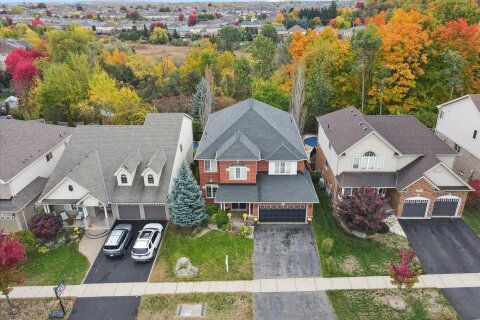
The Neighbourhood Test Drive: How to Really Evaluate a Waterloo Region Neighbourhood Before You Buy


You wouldn't buy a car after looking at one photo. You'd drive it. On the highway, in traffic, over rough roads. You'd test the brakes, check the blind spots, listen for weird noises.
So why do so many buyers choose a neighbourhood after scrolling through a few listings and driving past once on a Sunday afternoon?
Spring home buying season is approaching, and if you're actively shopping or about to start, your neighbourhood research matters at least as much as your property search — probably more. You can renovate a kitchen. You can't renovate a commute, a school catchment, or the neighbour who runs a home auto repair shop until midnight.
This is where working with a local buyer's agent pays for itself before you've even made an offer. The best neighbourhood research happens on the ground, at different times, with experienced eyes alongside yours.
Think of it as a test drive — one where your agent already knows the road. Because the neighbourhood that charms you on a sunny Saturday morning might tell a very different story on a rainy Tuesday at 5 p.m., and a good agent will know that before you discover it the hard way.
Why Online Research Isn't Enough
Let's acknowledge the starting point. Most buyers begin their neighbourhood research online, and that's fine. Listing portals, mapping tools, and satellite imagery give you a useful overview. You can check proximity to schools, parks, shopping, and transit routes. You can look at average sale prices and housing stock.
But here's what online research can't tell you: what it actually feels like to be there.
It can't tell you about the traffic noise at rush hour. It can't tell you that the "quiet crescent" backs onto a commercial parking lot with delivery trucks at 6 a.m. It can't tell you that the park down the street is beautifully maintained or that it's been neglected for years. It can't tell you whether the neighbours have pride of ownership or whether the street has a general air of deferred maintenance.
It also can't tell you about the intangibles that make a neighbourhood feel like home: the pace of foot traffic, the mix of people out walking, whether kids are playing on front lawns, whether people make eye contact and say hello.
This is precisely where local expertise becomes invaluable. An experienced Waterloo Region buyer's agent has already walked these streets hundreds of times. They know the difference between what a neighbourhood looks like online and how it actually lives. But even with that expertise guiding you, there's no substitute for experiencing a neighbourhood yourself — with the right context to know what you're looking at.
The Three-Visit Minimum

At Team Pinto, we recommend a minimum of three visits to any neighbourhood you're seriously considering — each one at a different time and under different conditions. Here's why each one matters.
Visit One: The Weekend Walk
This is your introductory visit, and it's best done on foot — ideally after your agent has already helped you narrow your neighbourhood shortlist based on your priorities, budget, and lifestyle.
What you're assessing: General feel, streetscape quality, maintenance levels, and your own gut reaction.
Walk the residential streets, not just the main roads. Look at the homes. Are they generally well-maintained? Are lawns tended and gardens cared for, or do you see a pattern of peeling paint, overgrown yards, and general neglect? A few homes in any neighbourhood will be less maintained than others — that's normal. But the overall trend tells you about neighbourhood pride of ownership, and that affects your property value over time. Your agent can tell you whether what you're seeing is typical for the area or whether a particular street is an outlier.
Notice the trees. Mature tree canopy takes decades to develop and dramatically affects both the visual character and the summer comfort of a street. New subdivisions can be beautiful, but they won't have this for twenty years.
Check the sidewalks and streets. Are they in good repair? Are there dedicated cycling paths or lanes? What's the overall infrastructure condition?
Look at the parked cars. This sounds odd, but it tells you something about the neighbourhood's density and parking reality. If streets are lined bumper-to-bumper with parked cars on a Saturday, the neighbourhood may have more vehicles per household than the streets were designed to handle. An experienced local agent will know whether this is a consistent issue or a one-off situation.
Most importantly, check your emotional response. Does this feel like a place you want to be? First impressions matter — not because they're always right, but because they're worth discussing with your agent, who can confirm or challenge them with deeper local knowledge.
Visit Two: The Weekday Rush Hour

This is the visit most buyers skip, and it's arguably the most important one. A good buyer's agent will flag commute considerations from the start — but nothing replaces experiencing it yourself.
What you're assessing: Traffic, noise, commute reality, and how the neighbourhood functions during a working day.
Drive your actual commute route from the neighbourhood during rush hour. Not the one Google Maps suggests at 2 p.m. on a Sunday — the real one, at 7:30 or 8 a.m. on a Tuesday. In Waterloo Region, the difference can be significant. That "15-minute drive to the office" might be 35 minutes when the Conestoga Parkway is backed up, or when Fischer-Hallman Road is stop-and-go, or when train crossings in older neighbourhoods catch you at peak times. Your agent will already know which routes bottleneck and which flow — but confirming it firsthand builds confidence in your decision.
If you'll use transit, take the bus or the ION LRT during rush hour. Time it. Note the experience. Is the stop sheltered? How frequent is the service? How crowded is the vehicle?
While you're in the neighbourhood on a weekday, listen. Is there highway noise you didn't notice on the weekend? Is there a school nearby producing a wall of traffic and noise at drop-off and pickup times? Are there commercial operations generating truck traffic? These are the things your agent can warn you about in advance, but hearing them for yourself makes the information real.
Visit Three: The Evening or After-Dark Visit

This one reveals the neighbourhood's nighttime personality.
What you're assessing: Street lighting, noise levels, general atmosphere, and safety feel.
Drive through the neighbourhood after dark, ideally on a weeknight. Is the area well-lit? Do the streets feel safe? Is there activity — people walking dogs, lights on in houses — or does it feel deserted?
Listen again. Night acoustics are different from daytime. Traffic noise from nearby highways can be more noticeable when ambient sound drops. Commercial operations, bars, or late-night businesses that aren't obvious during the day become evident at night.
Check the parking situation again. In neighbourhoods with limited driveway space or no garages, street parking after 7 p.m. tells you the real parking story.
If you're considering an area near the universities, an evening visit during the academic year will tell you far more about the student-housing dynamic than a daytime drive-by.
What Your Agent Should Be Investigating For You
Your on-the-ground visits give you the experiential picture. But there's critical background research that a knowledgeable local buyer's agent handles as part of your search — and this is where working with the right agent makes the biggest difference.
Future Development
This is the one that catches buyers off guard more than any other. You buy a home on a quiet street backing onto an open field, and two years later that field becomes a townhouse development or a commercial plaza.
This is exactly the kind of surprise a good buyer's agent prevents. At Team Pinto, checking development applications is a standard part of our research for every buyer. We look at what's approved, what's under application, and what's likely based on current zoning and official plan designations.
We use tools like the City of Kitchener's interactive planning map, EngageWR (the Region's public engagement platform at engagewr.ca), and equivalent systems for Waterloo and Cambridge — but more importantly, we understand what these applications actually mean for a neighbourhood's future character and your property value.
Pay particular attention to areas near ION LRT stations. Kitchener's Growing Together initiative is planning significant intensification around rapid transit stations, which means neighbourhoods near the LRT corridor may see substantial change in the coming years. This isn't necessarily negative — transit access often increases property values — but it's something your agent should be explaining to you in detail before you commit.
Schools
If you have children or plan to, school catchment areas matter. Your agent should be confirming the exact school assignments for any specific address you're considering — boundaries occasionally shift, and assumptions based on neighbourhood proximity aren't always accurate.
Beyond the data, it's worth walking the route your child would take to school. Is it safe? Are there sidewalks the entire way? Are there crosswalks at busy intersections? How long does the walk actually take? This is something you can do during your neighbourhood visits, and your agent can point you toward the right routes.
Property Taxes
Waterloo Region property taxes vary by municipality — Kitchener, Waterloo, and Cambridge each have different tax rates. The same assessed value can result in meaningfully different annual tax bills depending on which side of a municipal boundary a property sits on. Some neighbourhoods, like Belmont Village and Bridgeport, straddle the Kitchener-Waterloo border, making this particularly relevant.
Your agent should be providing tax information as a standard part of evaluating any property and helping you understand how taxes factor into your total monthly housing costs.
The Neighbours
Chatting with someone gardening or walking their dog during one of your visits can reveal things no amount of online research will. How long have they lived here? What do they like about it? What would they change?
But there's a limit to what casual conversations uncover. Your buyer's agent brings a deeper layer of neighbourhood intelligence — knowledge built from years of showing homes, attending inspections, talking with other agents, and tracking how different streets and pockets within a neighbourhood perform over time.
At Team Pinto, we know things about Waterloo Region neighbourhoods that don't appear on any website: which streets have had recurring issues, which areas are trending positively, and which pockets offer better value than their neighbours a few blocks away.
Services and Amenities
During your visits, note the practical details that affect daily life:
Where's the nearest grocery store, and is it the one you'd actually shop at? Where's the closest pharmacy? Walk-in clinic or family doctor accepting patients? What about a dentist, vet, or daycare? These aren't glamorous considerations, but they're the ones that shape how you experience your neighbourhood every single week.
Check Canada Post delivery — does the neighbourhood have door-to-door delivery or community mailboxes? In newer developments and some older areas, it's community boxes, and their location relative to your home matters in a Waterloo Region winter.
Common Neighbourhood Research Mistakes
Visiting only in the best conditions. A neighbourhood on a perfect June Saturday is at its most flattering. Visit in poor weather, in the dark, and during periods of high traffic to see the full picture.
Assuming your neighbourhood will stay exactly as it is. Neighbourhoods change. Intensification, new development, changing demographics, and infrastructure projects all reshape communities over time. Research what's planned, not just what exists.
Overweighting one factor. The perfect school, the closest park, or the shortest commute shouldn't override a neighbourhood that doesn't feel right overall. Balance matters.
Skipping the commute test. The number one regret we hear from buyers who wish they'd chosen differently? "I didn't realise how long the commute actually takes." Test it in real conditions.
Falling in love with a house and ignoring the neighbourhood. A beautiful home in a neighbourhood that doesn't suit your life is a compromise you'll feel every day. A modest home in the right neighbourhood is a compromise you'll barely notice.
Why This Works Best as a Partnership

Here's the honest truth: you can do some of this neighbourhood research on your own, and what you observe with your own eyes matters. No one else can tell you whether a neighbourhood feels right for your life.
But neighbourhood evaluation is where working with a knowledgeable local buyer's agent transforms from "nice to have" into genuinely essential. The difference between doing this alone and doing it with Team Pinto is the difference between a test drive and a test drive with a mechanic in the passenger seat.
We know which Waterloo Region neighbourhoods are gaining value and which are softening. We know where development applications signal future change. We know the micro-differences between streets that look identical on a map. We know the commute realities, the school catchment quirks, the tax implications, and the dozens of other factors that online research simply can't reveal.

When we work with buyers, neighbourhood research isn't an afterthought — it's where we start. We help you build a neighbourhood shortlist based on your priorities before you ever look at a single listing. We provide the local intelligence that makes your on-the-ground visits more focused and more productive. And we ensure you're making a neighbourhood decision based on complete information — not a pleasant Sunday drive and a few online reviews.
Spring home buying season is ahead. If you're starting to think about where in Waterloo Region you want to live, the best first step isn't browsing listings — it's having a conversation about neighbourhoods with someone who knows them inside and out.
Contact Team Pinto at 519-818-5445 or visit teampinto.com. We'll help you find not just the right house, but the right neighbourhood — and that's the decision that matters most.