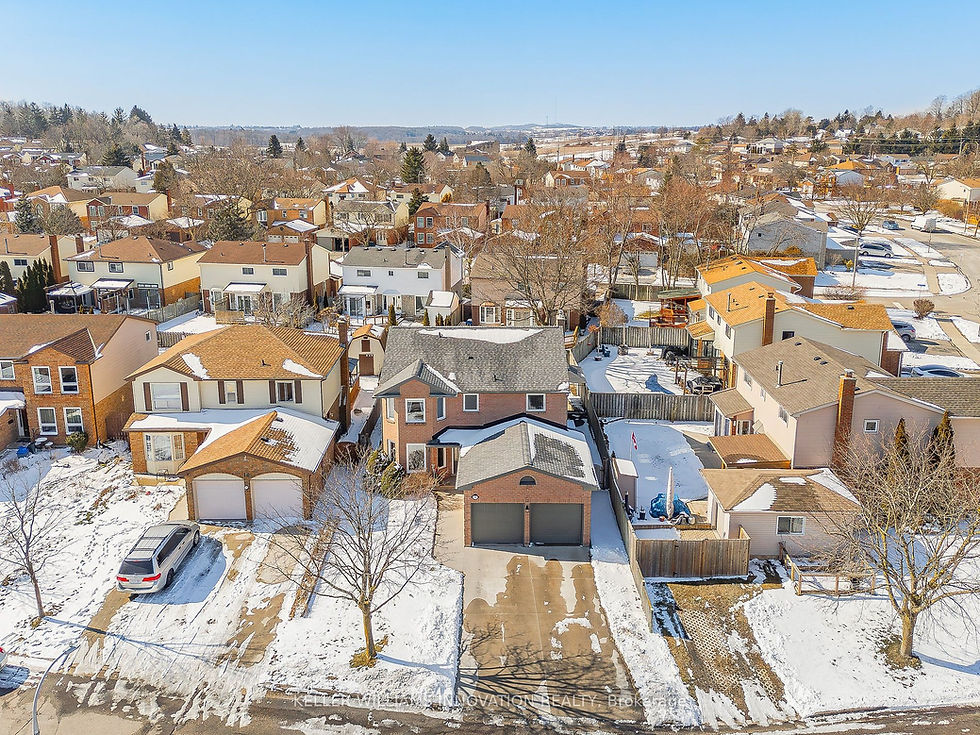
Your 2026 Waterloo Region Real Estate Outlook: Why Next Year Brings Real Opportunities


Let's talk about 2026.
Not with doom-and-gloom predictions or scary headlines, but with actual numbers, thoughtful analysis, and—here's the important part—genuine reasons for optimism whether you're planning to buy or sell in the year ahead.
After years of market extremes, from the 2021 frenzy to the 2023-2024 adjustment period, Waterloo Region's real estate market is settling into something we haven't seen in a while: balance. And balance, it turns out, creates opportunities that benefit almost everyone.
The Big Picture: What's Actually Happening
Here's where we are right now, heading into 2026.
The Bank of Canada's policy rate currently sits at 2.25% after significant cuts throughout 2024 and 2025. Most major Canadian banks—including TD Economics, RBC, CIBC, and the National Bank of Canada—expect this rate to remain stable through 2026, possibly holding near 2.25% for most or all of the year.
What does this mean in real terms? Borrowing costs have become significantly more manageable than they were just 18 months ago, and they're expected to stay that way through next year. For buyers, that stability is powerful—you can make plans without worrying about rates jumping dramatically while you're house hunting.
For Waterloo Region specifically, current market data shows we're in a balanced market with about 31 days average time to sell and inventory levels significantly higher than recent years. This isn't a bad thing. It's actually creating space for thoughtful decision-making on both sides of transactions.
What the Experts Are Saying About 2026 (And Why It's Actually Good News)
RE/MAX's 2026 Outlook for Kitchener-Waterloo predicts prices will remain relatively flat through the first half of 2026, with modest adjustments possible in the second half. Now, some people read "flat prices" as negative. We see it differently.
Flat or modestly declining prices in an environment of stable interest rates means affordability is genuinely improving. When you combine steady prices with lower borrowing costs, buying power increases substantially. That $620,000 townhouse that felt out of reach at 5.5% interest rates? At current rates near 5%, your monthly payment drops by hundreds of dollars. That matters.
Canada Mortgage and Housing Corporation expects housing starts in the Kitchener-Cambridge-Waterloo area to increase in 2025-2026, particularly in rental apartments. More supply means more choices for buyers and renters alike.
The Canadian Real Estate Association forecasts national home sales to rebound 6.3% in 2026, with the national average home price predicted to increase by 3%. For context, Waterloo Region has historically outperformed national averages in terms of market stability and long-term value retention.
The Affordability Story: It's Actually Improving
Let's talk about something that matters to everyone: affordability.
Yes, home prices in Waterloo Region are still substantial—averaging around $755,000 across all property types. But here's what's changed: the combination of modest price adjustments and significantly lower interest rates means monthly carrying costs have dropped considerably from their 2023 peaks.
Consider this real example:
2023 scenario:
$700,000 home
5.5% mortgage rate
10% down payment
Monthly mortgage payment: approximately $3,760
2026 scenario:
$700,000 home (same or similar price)
4.5% mortgage rate (conservative estimate)
10% down payment
Monthly mortgage payment: approximately $3,200
That's $560 per month in savings, or $6,720 annually, simply from rate changes. And that doesn't even account for increased earnings over those years for many buyers.
For first-time buyers targeting the $500,000-$600,000 range that RE/MAX identifies as the sweet spot for entry-level homes, these improvements are meaningful. Your buying power has genuinely increased.
What This Means for Buyers in 2026
If you've been sitting on the sidelines waiting for "the right time," 2026 presents several genuine advantages:
More Time and Less Pressure
Remember the spring 2021 market where you had to make decisions in hours, waive inspections, and offer tens of thousands over asking just to compete? That's not 2026.
With average days on market at 31 and inventory well above historical norms, you have time. Time to view properties multiple times. Time to get thorough inspections. Time to think about whether a home truly fits your needs rather than making desperate split-second decisions.
This isn't a slow market—homes are still selling steadily. But it's a thoughtful market, which benefits buyers enormously.
Negotiation Is Back
In balanced markets, reasonable negotiations happen. Not the aggressive lowball situations that insult sellers, but genuine discussions about price, closing dates, inclusions, and conditions.
Sellers understand current market realities. Homes that are well-priced and well-presented still sell quickly and at fair prices. But there's room for conversation, which simply didn't exist two years ago.
Selection Across Property Types
Current Waterloo Region inventory levels show:
Condominiums: 5.1 months of supply
Townhouses: 3.5 months of supply
Detached homes: 1.5 months of supply
This variety means you're not limited to whatever scraps happen to be available. You can actually find properties that match your needs rather than settling for what's minimally acceptable.
Stable Rate Environment for Planning
When rates are predictable, you can plan. You can run your numbers, get pre-approved, and know those numbers won't dramatically shift while you're house hunting. Most major banks expect rates to remain stable through 2026, giving you confidence in your budget and timeline.
What This Means for Sellers in 2026
Sellers looking at 2026 might feel anxious about headlines discussing "flat prices" or "adjustments." Let's reframe this with actual opportunities:
Quality Over Quantity
In a balanced market, the well-prepared home wins. This isn't about luck or timing—it's about presentation, pricing, and positioning.
Homes that are clean, well-maintained, and appropriately priced are still selling in reasonable timeframes. The difference from 2021? Buyers are discerning now. They're comparing options. They're looking carefully.
This actually benefits good sellers. Your well-maintained, properly priced home stands out more dramatically when buyers are carefully evaluating properties than it did in 2021 when anything sold instantly.
Motivated Buyers Are Genuine
The buyers in the market right now aren't tire-kickers or speculators. They're people with real housing needs making serious decisions. They've done their homework, secured financing, and are ready to move forward.
When you receive an offer in 2026's market, it's likely from a qualified, committed buyer rather than someone gambling on flipping or speculating.
Strategic Timing Options
With stable interest rates expected through the year, you're not racing against some arbitrary deadline. You can:
List when your home shows best
Take time to prepare properly (repairs, staging, professional photos)
Choose your timing based on personal circumstances rather than market panic
Realistic Pricing Leads to Actual Sales
Here's something important: in balanced markets, realistic pricing gets homes sold. Overpricing leads to extended days on market, eventual price reductions, and lower final sale prices than if you'd priced correctly initially.
But when you price competitively from day one based on current comparable sales, you attract serious buyers quickly. According to recent Waterloo Region data, well-priced homes are still selling near asking prices within reasonable timeframes.
The Waterloo Region Advantage: Why Local Matters

National headlines don't tell the whole Waterloo Region story. Our market has specific strengths:
Economic Resilience
Waterloo Region's economy, anchored by technology, manufacturing, education, and healthcare, provides diversification that many markets lack. While some employers have relocated, the region continues to attract new businesses and talent.
The University of Waterloo, Wilfrid Laurier University, and Conestoga College provide ongoing demand and economic activity. The tech sector, while adjusting, remains a significant employer and innovation driver.
Infrastructure Investment
Ongoing LRT expansion, road improvements, and development of complete communities continue to enhance livability and connectivity. These long-term investments support property values over time.
Relative Affordability
Compared to Toronto, Waterloo Region offers significantly more affordable housing while maintaining access to urban amenities, employment opportunities, and quality of life. This relative value attracts both relocating buyers and investors.
Geographic Advantages
Waterloo, Kitchener, Cambridge, Guelph, and Milton each offer distinct neighbourhoods and price points, providing options for different buyer segments. This diversity strengthens the overall market.
The Interest Rate Reality: What You Need to Know
Let's address the elephant in the room: what if rates change?
According to multiple bank forecasts, here's the consensus:
Most likely scenario: Rates remain near 2.25% through most or all of 2026
Possibility: One or two modest cuts bringing rates to 2.0%
Lower probability: Rates rise modestly to 2.5%-2.75% if inflation concerns reemerge
Even in the "rates rise" scenario, we're talking about increases to 2.5-2.75%—still dramatically lower than the 5.0% peak we experienced. The era of emergency-low rates (sub-2%) is probably behind us, but the era of emergency-high rates (5%+) also appears to be over.
For buyers: if you're considering waiting for rates to drop further, remember that lower rates often trigger increased competition and higher prices. The math sometimes works better buying at slightly higher rates with less competition than waiting for lower rates that bring bidding wars.
For sellers: stable rates mean predictable buyer behavior. You're not trying to time the perfect moment when rates drop—you're working with steady, plannable conditions.
Looking at Different Buyer and Seller Scenarios
First-Time Buyers
Your 2026 opportunity: Improved affordability, time to find the right home, ability to get inspections, and genuine negotiation possibilities. The RE/MAX forecast specifically notes first-time buyers are focused on turn-key homes in the $500,000-$600,000 range—and inventory exists in this segment.
Your strategy: Get pre-approved early, understand your complete budget (including closing costs and ongoing expenses), work with an agent who knows first-time buyer programs and incentives, and don't rush. This market rewards patience and preparation.
Move-Up Buyers
Your 2026 opportunity: If you bought in the $500,000-$600,000 range years ago and have built equity, you're in a strong position to move up. The gap between starter homes and move-up homes ($750,000-$950,000 range) hasn't widened dramatically, and you can shop with confidence.
Your strategy: Consider the timing of selling your current home versus buying your new one. In balanced markets, you have more flexibility with timing than in hot markets. Work with your agent to determine whether selling first or buying first makes more sense for your situation.
Downsizers and Retirees
Your 2026 opportunity: Excellent inventory in the condo and townhouse sectors means genuine choice. You're not settling for whatever's available—you can find properties that truly match your lifestyle needs. The RE/MAX data notes downsizers typically budget around $600,000 and prioritize low maintenance.
Your strategy: Take your time finding the right property. The days of needing to sell immediately and then scrambling to find anything acceptable are over. You can plan strategically, possibly selling in spring when your current home shows beautifully and buying in a timeframe that works for you.
Investors
Your 2026 opportunity: Rental vacancy rates are expected to increase in 2026 as significant new rental supply comes online. This might seem negative, but it actually presents opportunities to acquire properties at reasonable prices while still benefiting from long-term fundamentals. Waterloo Region's ongoing population growth and university presence provide underlying rental demand.
Your strategy: Focus on properties near universities, transit, and employment centers. Look for well-maintained properties that won't require extensive immediate updates. Be realistic about rental yields in the current environment.
The Month-by-Month Outlook for 2026
While no one has a crystal ball, historical patterns and current indicators suggest:
January-February: Typically quieter months with less competition. Serious buyers are active, but casual browsers wait for spring. Good opportunity for motivated buyers to negotiate and for sellers to capture early-year buyers before competition increases.
March-April: Traditional spring market begins. Inventory increases, buyer activity picks up, but in a balanced market this doesn't create the frenzy of past years. Expect more showings, more offers, but still reasonable timeframes.
May-June: Peak activity season. Most inventory, most buyers, most transactions. Properties show beautifully, families want to move before school ends. Competitive but not chaotic based on current trajectory.
July-August: Slight summer slowdown as vacations happen, but active buyers are serious. Less competition than spring but still steady activity.
September-October: Second peak as families settle post-vacation, buyers who waited through summer get serious, and sellers prepare for year-end. Good balance of inventory and buyers.
November-December: Activity slows but motivated buyers and sellers remain. Less competition, possible year-end urgency from some sellers, opportunity for strategic buyers.
Throughout all of this, remember: Bank of Canada rate announcements happen eight times annually (January 29, March 12, April 16, June 4, July 16, September 3, October 29, December 10). These dates create moments of uncertainty, but consensus suggests any changes will be modest.
What Could Change These Projections?
Honesty matters, so let's acknowledge the uncertainties:
Economic factors: Trade policy changes, particularly any shifts in Canada-US relations, could impact regional employment and confidence. The Bank of Canada has noted that trade uncertainty creates unpredictability in economic projections.
Immigration policy: Changes to immigration targets affect population growth and housing demand. Recent reductions in immigration goals will impact demand, though Waterloo Region's universities provide ongoing population draw.
Inflation concerns: If inflation rebounds significantly, the Bank of Canada might raise rates. Current indicators suggest inflation is controlled near the 2% target, but this bears watching.
Global events: Geopolitical situations, economic disruptions, or unexpected events can shift market dynamics quickly.
Local employment: Any significant employer relocations or expansions in Waterloo Region would affect local market conditions.
The point isn't to worry about every possible scenario. It's to recognize that real estate markets exist within broader contexts and remain adaptable. Even if conditions shift, Waterloo Region's fundamental strengths—location, education, infrastructure, economic diversity—provide underlying market support.
Why "Flat Prices" Aren't Bad News
Let's address the narrative you'll see in headlines: "Kitchener-Waterloo prices expected to remain flat or decline modestly in 2026."
If you're a buyer, flat prices combined with lower interest rates means you're entering the market at a much better affordability point than 2022-2023. That's genuinely positive.
If you're a seller, flat prices in a stable rate environment means you can plan realistically. You're not gambling on dramatic appreciation, but you're also not facing market collapse. You can price accurately, sell efficiently, and move on with your plans.
For long-term homeowners, modest year-to-year price fluctuations don't matter much. What matters is that over 5, 10, or 20 years, Waterloo Region real estate has historically provided solid value appreciation and housing security. Nothing about 2026's outlook changes those long-term fundamentals.
The fixation on constant price appreciation is actually unhealthy for housing markets. Stable prices with stable rates create sustainable, functional housing markets where people can buy homes they'll live in for years rather than speculating on quick flips.
The Bottom Line: Planning Your 2026 With Confidence

Here's what all of this actually means for your 2026 real estate decisions:
If you're buying: You have genuine advantages in 2026. More time, more choice, better affordability than recent peak years, stable borrowing costs, and real negotiating possibilities. This doesn't mean homes are "cheap"—Waterloo Region's fundamental value remains strong. But it means you can approach home buying thoughtfully rather than desperately.
If you're selling: You need to be strategic and realistic, but there's absolutely a market for well-prepared, well-priced homes. Buyers are active, motivated, and qualified. You're not facing a market crisis—you're facing a market that rewards quality and realistic pricing rather than lucky timing.
If you're watching and waiting: The time to engage is when it makes sense for your personal circumstances—job stability, family needs, financial readiness. Market timing is less important than life timing. That said, 2026's stable environment makes planning and executing real estate transactions significantly easier than volatile markets.
How Team Pinto Helps You Navigate 2026
All of this data, all of these projections, all of this analysis means nothing without local expertise to help you apply it to your specific situation.
This is where real estate guidance becomes valuable—not telling you what the national headlines say (you can read those yourself), but helping you understand what's happening on your specific street, in your target neighbourhood, with your particular property type, for your unique circumstances.
We live and work in Waterloo Region. We see what's selling, what's sitting, what buyers are actually willing to pay, what sellers are realistically accepting. We know which neighbourhoods are holding value best, which property types have the most competitive inventory, where first-time buyers can find opportunities, and where move-up buyers should focus their search.
We can help you:
Price your home competitively based on actual current comparable sales, not what you wish it was worth or what online estimates say
Identify properties that represent genuine value in today's market before they're snapped up
Navigate negotiations in balanced markets where reasonable discussions happen
Time your buying or selling strategically within the 2026 calendar based on personal circumstances
Connect with mortgage professionals, lawyers, home inspectors, and other service providers who understand current market realities
Avoid the common mistakes buyers and sellers make when market conditions shift from extremes to balance
Your Next Steps

Whether you're planning to buy in spring 2026, sell in the summer, or you're just starting to think about possibilities for next year, now is the time to start conversations and planning.
The beauty of stable, balanced markets is that you can plan. You don't have to make panicked decisions or miss narrow windows. But you do need to be strategic, informed, and realistic.
If you're considering any real estate move in 2026:
Contact Team Pinto now. Not because you need to rush into action (you don't), but because planning takes time, and understanding your specific situation, goals, and constraints allows us to guide you effectively when you're ready to move forward.
We'll help you:
Understand what your current home is realistically worth in today's market (if selling)
Calculate what you can truly afford including all costs (if buying)
Develop a strategic timeline that matches your circumstances
Position yourself to take advantage of 2026's opportunities rather than falling prey to its challenges
2026 brings genuine opportunities for both buyers and sellers in Waterloo Region. The key is approaching it with eyes open, expectations realistic, and guidance solid.
Let's make your 2026 real estate goals happen—thoughtfully, strategically, and successfully.
Ready to discuss your 2026 real estate plans? Contact Team Pinto today.
Market projections based on December 2025 data from Bank of Canada, RE/MAX, CMHC, CREA, TD Economics, and Cornerstone Association of REALTORS. Projections are estimates based on current information and are subject to change. Individual circumstances vary. Contact Team Pinto for personalized guidance specific to your situation and timeline.