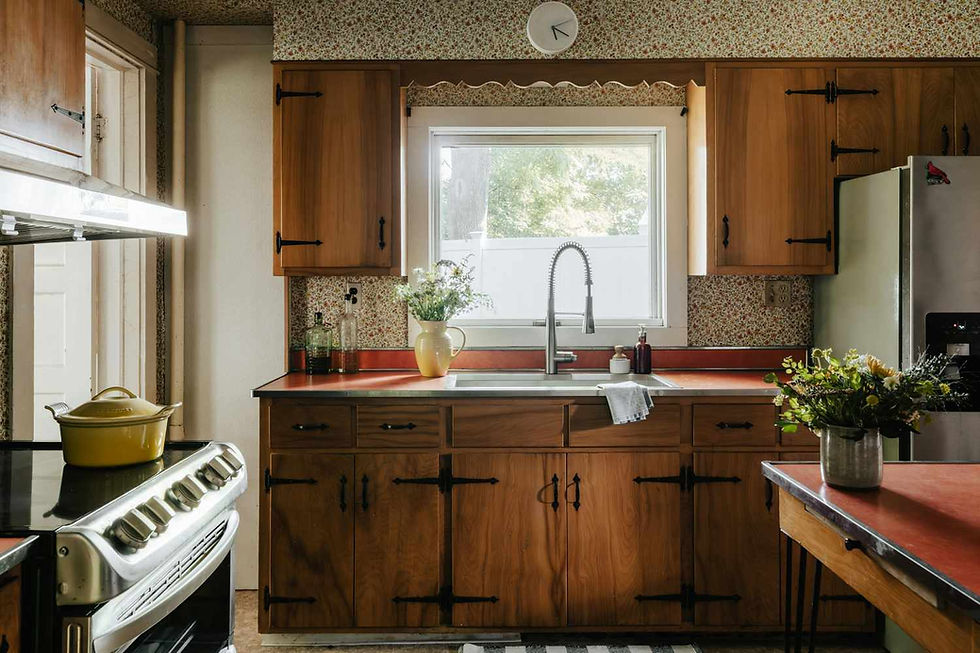
What Your Neighbours' Renovation Means for Your Home Value


You didn't choose the new kitchen. You didn't pick the siding colour. You certainly didn't write the cheque. But when your neighbour across the street finishes a major renovation, your home's value just changed — and you didn't lift a finger.
This is one of the least discussed realities of homeownership: your property value doesn't exist in isolation. It's shaped by what's happening around you — on your street, on your block, and across your neighbourhood. When the house next door gets a beautiful new front porch and refreshed landscaping, every home on the street benefits. When the house on the corner sits with peeling paint and an overgrown yard, every home on the street pays a price.
Understanding this dynamic matters whether you're planning to sell soon, staying for years, or just trying to make sense of what's happening on your street. Your neighbours' decisions are quietly influencing your largest financial asset — and knowing how gives you a meaningful advantage.
The Rising Tide Effect

Real estate professionals have long understood what academics call the "spillover effect" — the measurable impact that one property's condition has on the values of surrounding properties. The research consistently shows that well-maintained and recently improved homes lift the values of nearby properties, while neglected properties drag them down.
This makes intuitive sense when you think about how buyers evaluate homes. Nobody looks at a property in complete isolation. They drive the street. They notice the neighbouring yards. They assess the overall feel of the block. A beautifully maintained home surrounded by other beautifully maintained homes creates a collective impression of a desirable street. That same home surrounded by deferred maintenance and neglect creates a very different impression — and buyers adjust their offers accordingly.
The effect is proportional to proximity. Your immediate neighbours — the homes on either side and directly across the street — have the strongest impact on your value. The influence diminishes with distance but extends across the broader street and, to a lesser degree, the neighbourhood as a whole.
When Your Neighbour's Renovation Helps You

Not all renovations are created equal when it comes to neighbourhood impact. Some improvements lift the entire street. Others are essentially invisible to anyone but the homeowner.
Exterior improvements have the strongest spillover effect. A new roof, updated siding, fresh paint, a rebuilt front porch, professional landscaping, a new driveway — anything that visibly improves the streetscape lifts the perceived quality of the entire block. These improvements are what buyers see during their first drive-by, and they shape the critical first impression before anyone steps inside a home.
Additions and expansions signal neighbourhood investment. When a neighbour adds a second storey, builds a garage, or extends their living space, it sends a market signal: someone just invested a significant amount of money in this street because they believe it's worth investing in. That confidence is contagious — and it tells future buyers that the neighbourhood has momentum.
Consistent maintenance across multiple homes is powerful. One beautiful home on an otherwise tired street has limited impact. But when three or four homes on the same block all show evidence of ongoing care — fresh landscaping, clean exteriors, well-maintained driveways — the cumulative effect on street-level values is significant. It creates the impression of a neighbourhood where owners are invested, and that impression directly affects what buyers are willing to pay.
Heritage restorations in established neighbourhoods. In Waterloo Region's older communities, when a homeowner carefully restores a heritage property — repointing brick, restoring original trim, replacing inappropriate past renovations with period-appropriate materials — it reinforces the character that makes the neighbourhood desirable in the first place. These restorations benefit every heritage home on the street by strengthening the area's identity.
When Your Neighbour's Choices Hurt You
The reverse is equally true, and often more acutely felt.
Visible neglect is the most damaging. A property with an unkempt yard, peeling paint, broken fencing, or accumulated clutter on the porch or driveway sends a signal to buyers that the street isn't well maintained. Even if every other home on the block is immaculate, one neglected property can reduce offers on neighbouring homes by creating doubt about the street's overall trajectory.
Exterior renovations that clash with the streetscape. A renovation that's dramatically out of character with the surrounding homes — an aggressive modern facade on a street of traditional brick, an oversized addition that dwarfs neighbouring properties, a colour choice that clashes with everything around it — can negatively affect the visual cohesion that makes a street appealing. Individual expression is fine, but dramatic departures from the street's character can make buyers uneasy about what else might change.
Conversions that change a property's use. When a single-family home is converted to a rooming house, a short-term rental, or a commercial use, it can affect the character and desirability of the surrounding properties. Increased traffic, parking pressure, noise, and a shift in the street's residential feel can all influence how buyers perceive neighbouring homes.
Long-term vacancy or construction delays. A home that sits empty for an extended period, or a renovation project that stalls mid-construction with scaffolding, tarps, and construction debris visible for months, creates an impression of instability that affects the entire street.
Reading the Signals: What Neighbourhood Change Tells You

Your neighbours' renovation activity isn't just about your current property value — it's also a signal about where your neighbourhood is heading. Learning to read these signals can inform your own decisions about investing in your home, timing a sale, or simply understanding the market around you.
A cluster of renovations on your street is a strong positive signal. When multiple homeowners invest in their properties within a short period, it suggests growing confidence in the neighbourhood. This is often the early stage of what real estate professionals recognise as neighbourhood momentum — the point where increasing investment creates a self-reinforcing cycle of improvement and rising values.
New builds or infill development in your neighbourhood. When developers start building new homes in an established neighbourhood — whether infill on vacant lots, rebuilds of older properties, or conversions of non-residential land — it means the market has identified your area as having sufficient demand to justify new construction costs. This is generally a positive signal for existing homeowners.
Renovations moving from interior to exterior. When neighbourhood investment shifts from behind-closed-doors updates (kitchens, bathrooms) to visible exterior improvements (facades, landscaping, driveways), it suggests homeowners are increasingly confident that the neighbourhood's trajectory supports visible investment. This is often a sign of growing pride of ownership and rising values.
The arrival of younger buyers. When homes on your street start selling to younger families who then invest in updates and improvements, it often signals a generational transition that brings fresh energy, rising values, and long-term neighbourhood stability. Young families who buy and renovate typically plan to stay — and their investment reflects that commitment.
What You Can Do
You can't control what your neighbours do with their properties. But you can make decisions that protect and enhance your own value within the context of what's happening around you.
Maintain your own property consistently. The most effective thing you can do for your property value — and for your street — is to keep your home's exterior in good condition. Clean landscaping, well-maintained siding and trim, a tidy driveway, and a welcoming front entrance aren't just about your own pride of ownership. They contribute to the collective impression that benefits every homeowner on the block.
Time your improvements strategically. If you're seeing a wave of renovations on your street, that's often a good time to invest in your own exterior improvements. You'll be contributing to — and benefiting from — the rising-tide effect. Your investment will be reinforced by the improvements around you, and the collective uplift will be greater than any individual renovation would achieve alone.
Understand your street's context before renovating. Before investing in a major exterior renovation, consider how it will relate to the surrounding homes. An improvement that complements the streetscape will return more value than one that stands apart from it. This doesn't mean every home should look the same — it means being thoughtful about how your choices fit within the neighbourhood's character.
Talk to your agent about neighbourhood trajectory. If you're noticing significant changes on your street — positive or negative — it's worth having a conversation with your real estate agent about what those changes mean for your property's value and your long-term strategy. At Team Pinto, we track neighbourhood-level trends that broader market statistics don't capture, and we can help you understand how local changes affect your specific situation.
When Neighbourhood Change Signals Opportunity

For buyers, understanding neighbourhood dynamics creates opportunity. A street where renovation activity is just beginning — where a few early investors are improving their properties but values haven't yet caught up — can represent excellent value for buyers willing to see the trajectory rather than just the current state.
This is one of the areas where working with a knowledgeable local agent pays for itself. Identifying neighbourhoods and streets in the early stages of positive change — before the market fully prices in the momentum — requires the kind of ground-level knowledge that comes from years of working in specific communities.

At Team Pinto, we help both buyers and sellers understand how neighbourhood dynamics affect property values. For sellers, we provide context on how your street's recent changes affect your pricing strategy and marketing approach. For buyers, we identify areas where positive momentum is creating value that the broader market hasn't yet recognised.
Your home's value is shaped by far more than its own four walls. Understanding the neighbourhood around you — and the changes happening on your street — gives you a clearer picture of your largest investment and helps you make smarter decisions about when to improve, when to sell, and when to simply enjoy the benefits of living on a street that's getting better.
Ready to understand how your neighbourhood's changes affect your home? Contact Team Pinto at 519-818-5445 or visit teampinto.com.
This article provides general information about neighbourhood property dynamics and is not a formal property valuation. For specific assessments of your home's current market value, contact Team Pinto for a Comparative Market Analysis. Team Pinto serves buyers and sellers across Kitchener, Waterloo, Cambridge, and the surrounding communities of Waterloo Region.